Musk Urges Suppliers to Speed Up Terafab
Tesla and SpaceX leaders promise early 2028 chip production, relying on faster equipment delivery from key semiconductor partners.
By Aever Bundji ·
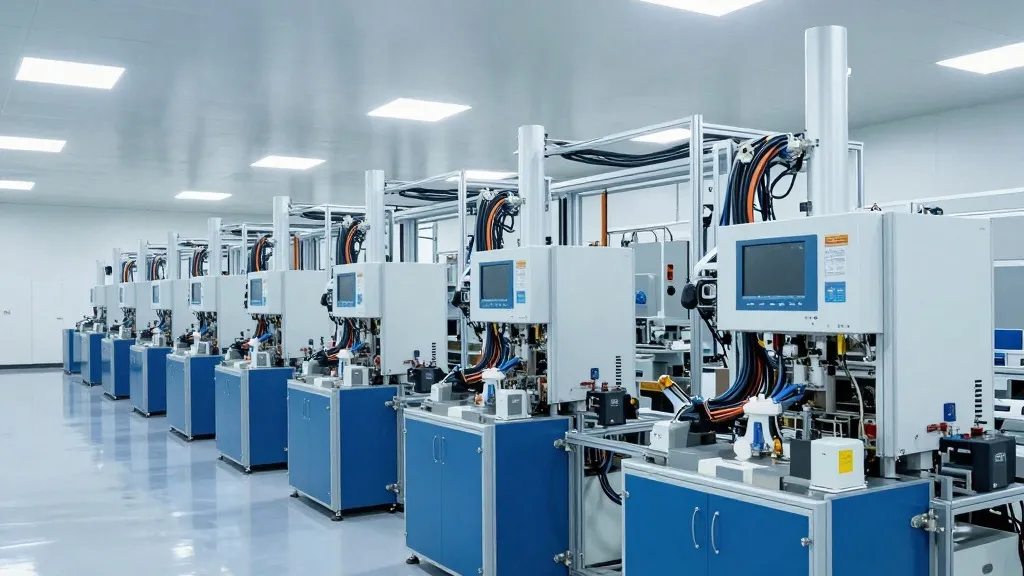
Elon Musk announced on October 20 that major equipment makers are rushing deliveries for the Terafab project. He made the statement during a live SpaceX earnings broadcast on X. This joint venture between Tesla and SpaceX aims to build a massive chip factory in Texas. The goal is to begin volume production by late 2028. Musk described this schedule as highly ambitious and noted that significant uncertainties remain.
Musk expressed gratitude to ASML and other suppliers for accelerating shipments. He emphasized that the dates are very aggressive. SpaceX plans to create its first experimental test chip at a research site in Austin by mid-2027. The main manufacturing facility will be located in Gibbons Creek, Texas. The project intends to handle logic, memory, and advanced packaging all in one place.
The facility targets a massive output of one terawatt of AI computing power per year. Musk claimed that once fully operational, the commercial value of this output could rival the GDP of the 20th largest economy. For comparison, Switzerland holds that position with a GDP of roughly 1.14 trillion dollars. The project uses Intel’s 14A manufacturing node and extreme ultraviolet lithography systems.
Intel joined the venture in April 2026 to help refactor silicon fabrication technology. ASML serves as the sole commercial supplier for the necessary EUV machines. These tools cost approximately 400 million dollars each. Unofficial reports suggest the first EUV tool was set for arrival in mid-2027. It is unclear if that timeline has been moved up as part of the expedited delivery plan.
Other key partners include American firms Applied Materials, Lam Research, and KLA Corporation. Japan’s Tokyo Electron is also involved in providing front-end processing equipment. Tesla and SpaceX are negotiating with about ten South Korean companies. These include Hanmi Semiconductor and HPSP, which supply specialized packaging and annealing tools. This wide network of suppliers is crucial for meeting the project's scale.
Musk also discussed his AI computing goals during the same broadcast. He expects his companies to activate 2.5 to 3 gigawatts of capacity by the end of 2026. He is confident in adding 10 gigawatts in 2027. This would bring his total to 13 gigawatts of AI compute. To achieve this, SpaceX and xAI are procuring next-generation NVIDIA hardware. A cluster of 440,000 Vera Rubin GPUs is planned for online use by mid-2027.
Experts remain skeptical about the one-terawatt target. Research firm Gartner estimates global AI-optimized data center capacity at roughly 44 gigawatts as of late 2026. This figure represents just 4.4% of Terafab’s planned annual output. Despite the skepticism, the project aims to reduce reliance on external foundries like TSMC. The chips will power xAI clusters, self-driving cars, Optimus robots, and orbital data centers.
Source: Tom's Hardware