Tesla to build in-house maps to fix common driving errors
The automaker is developing a proprietary navigation system to address persistent issues with speed limit recognition and route selection in its autonomous software.
By Ananya Gupta ·
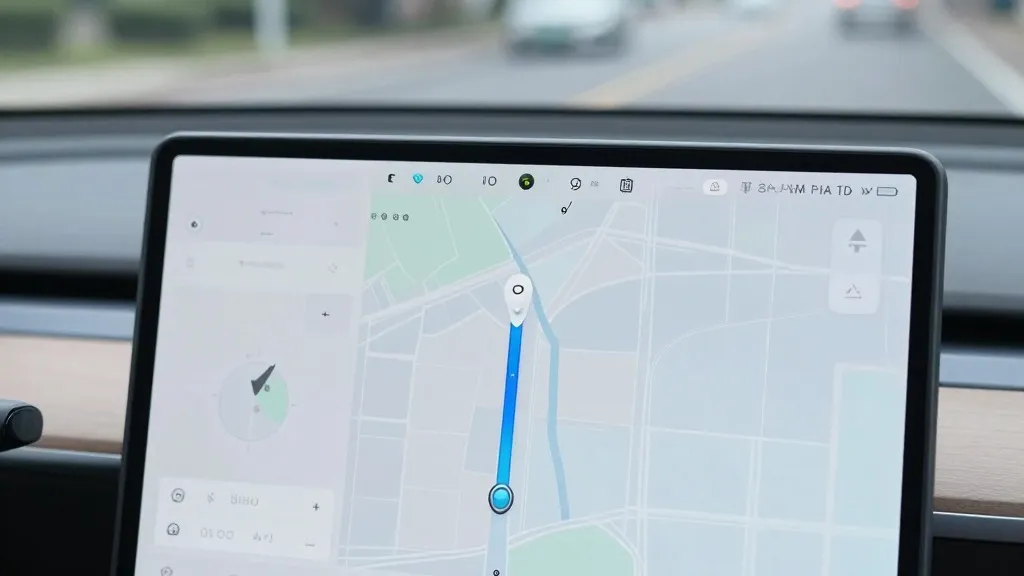
Drivers using Tesla’s Full Self-Driving software will soon see changes to how their vehicles handle navigation, speed limits, and parking. The company is moving away from third-party map data to develop its own proprietary mapping system, a shift aimed at correcting frequent errors in the current software. This development signals a significant change in how the vehicle interprets its environment, particularly regarding basic road information that has previously caused confusion for users and other drivers.
The primary motivation for this change is to resolve specific pain points in the driving experience. According to a retail investor’s query on Tesla’s recent earnings call, speed limit recognition, parking maneuvers, and typical route selection are the most common complaints. Tesla’s Vice President of AI, Ashok Elluswamy, acknowledged that the company should no longer rely on external providers for this foundational data. He stated that the new system will be built using an AI-based architecture that learns from the collective data of Tesla’s global fleet, while also adapting to individual driver preferences and voice commands.
The rollout of this technology is already underway. With the release of version 15 of the Full Self-Driving software, the new mapping capabilities will initially handle the start and end of trips. Over the coming months, the system is expected to take over broader navigation tasks, including destination handling and parking. This phased approach allows the company to integrate the new map layer gradually into the existing software stack.
This strategic pivot marks a notable departure from Tesla’s historical position on autonomous driving. For years, the company’s leadership argued that reliance on pre-mapped data made self-driving systems brittle and overly dependent on specific infrastructure. In 2019, during an Autonomy Day presentation, the company described its previous attempts at high-precision lane maps as a mistake, favoring a vision-only approach that could operate anywhere without prior mapping. At the time, the company dismissed the use of lidar and detailed maps as crutches used by competitors, positioning its technology as a more generalizable solution.
However, practical challenges have forced a reassessment of that philosophy. Despite the vision-based design, the software still struggles with simple environmental cues, such as reading speed limit signs. Recent tests in Brussels highlighted these issues, with a road safety group finding that the system exceeded the 30 km/h limit in more than half of the zones tested, often because the car’s display showed an incorrect 50 km/h limit. In the United States, regulators are also examining reports of Tesla robotaxis speeding through school zones, further underscoring the need for more reliable environmental data.
The new approach brings Tesla’s methodology closer to that of its competitors, such as Waymo. Both companies now rely on their vehicle fleets to collect data and build maps that inform the driving AI. While Waymo uses lidar to create high-definition maps before launching service in a specific city, Tesla is using its existing customer fleet to generate a map layer that becomes more detailed over time. This convergence suggests that the fundamental challenges of autonomous driving require similar solutions, regardless of the specific sensor hardware used.
Contextually, this move aligns with the operational reality of Tesla’s robotaxi service, which currently operates within specific geofenced areas. By building its own maps, Tesla can ensure that the data matches the specific conditions of the cities where it operates. Although the company is not currently producing centimeter-level high-definition maps, the continuous data collection from its fleet provides a scalable foundation for future improvements. This internal map layer allows Tesla to maintain control over the navigation data that directly impacts the safety and efficiency of its autonomous vehicles.
The shift also addresses the long-standing criticism that Tesla’s vision-only approach was insufficient for certain driving tasks. By acknowledging the need for a dedicated map layer, the company is effectively validating the importance of environmental data in autonomous driving. For consumers, this means the software should become more consistent in handling basic navigation tasks, reducing the likelihood of unexpected behavior at intersections or in parking lots. The integration of individual driver preferences into the map data adds a layer of personalization that could improve the overall user experience.
Looking ahead, the implementation of this new mapping architecture will be a key factor in the maturity of Tesla’s Full Self-Driving system. The success of the rollout will depend on how well the AI can integrate the new map data with the existing vision models. If the system can reliably interpret speed limits and routes using this proprietary data, it will address one of the most significant criticisms of the current software. As the fleet continues to grow and collect more data, the map layer will become increasingly robust, potentially closing the gap between Tesla’s approach and that of other major players in the autonomous vehicle space.
The company’s decision to build its own maps also reflects a broader trend in the industry toward self-reliance in critical infrastructure. By controlling its own navigation data, Tesla can iterate more quickly and tailor the system to specific market needs. This move is expected to benefit both the company’s robotaxi operations and its consumer vehicle fleet, providing a more stable foundation for future software updates. As the technology matures, the distinction between different autonomous driving approaches may become less relevant, with the focus shifting to the reliability and safety of the final product.
Source: Electrek